Source CNC Machined Metal Potentiometer Knob for Audio, Auto, and Hardware
Find and compare 30 listings for cnc machined metal potentiometer knob options tailored for audio controls, automotive accessories, and general hardware tools. Evaluate material capabilities like aluminum and stainless steel, tolerance grades, and surface treatments to identify suitable OEM suppliers for your specific engineering requirements.
Key considerations
Products List







Comprehensive Sourcing Guide
CNC Machined Metal Potentiometer Knob Sourcing Guide
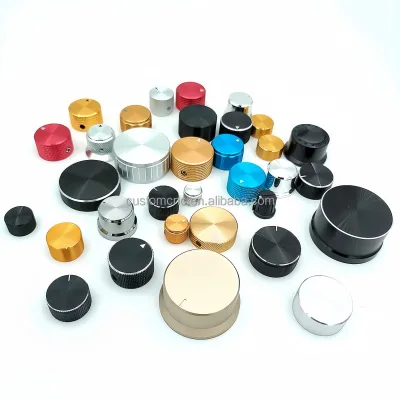
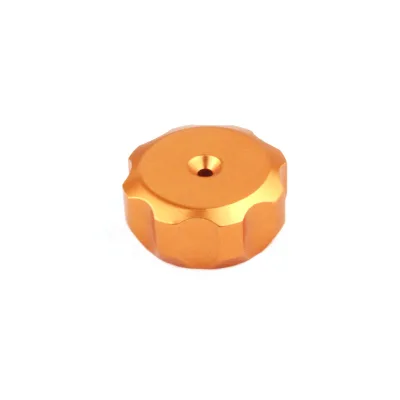
Sourcing CNC machined metal potentiometer knobs requires a precise understanding of the intersection between die casting capabilities and high-tolerance machining. The market offers a diverse range of components, from general hardware accessories to specialized automotive and motorcycle parts, often utilizing aluminum alloys as the primary material base. Buyers must distinguish between suppliers who focus on mass-produced die-cast blanks and those offering full-service OEM solutions that include precision CNC milling and turning to achieve final tolerances. The observed product landscape includes specific models designed for audio equipment, such as guitar pedals and radio volume controls, as well as industrial hardware applications requiring robust mechanical properties.
The procurement process is heavily influenced by the customization capabilities available in the supply chain, particularly regarding surface treatments and dimensional accuracy. While some listings highlight standard die-casting methods, the critical value for potentiometer knobs often lies in the subsequent CNC machining steps that ensure shaft hole diameters and set screw alignments meet exacting standards. Buyers should verify if the supplier can handle the full spectrum of materials, including aluminum, copper, and stainless steel, to match specific environmental or electrical requirements. Understanding the distinction between a raw die-cast component and a finished, machined knob with anodized or polished surfaces is essential for defining the scope of the purchase order.
Product Scope and Observed Listing Signals
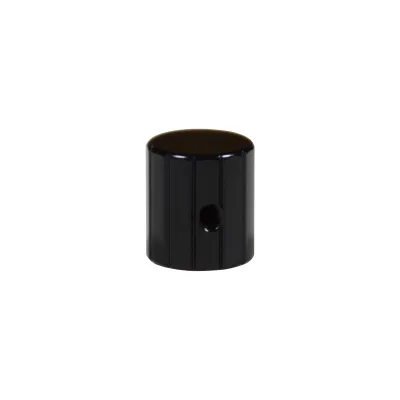
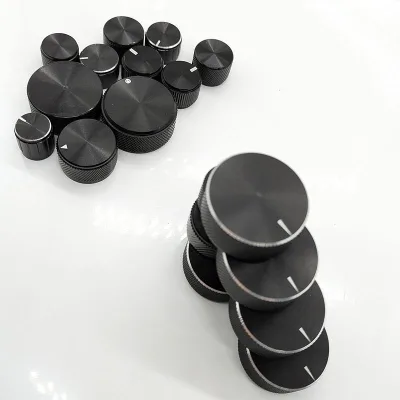
The product scope for CNC machined metal potentiometer knobs spans various industries, including hardware tools, machinery accessories, and automotive applications. Observed listings indicate a strong presence of components designed for audio and control systems, such as guitar audio radio volume controls and control knobs with specific shaft hole diameters like 6.35mm. These products often feature specific dimensions, such as a 15mm size and 12.5mm height, tailored to fit standard potentiometer shafts. The variety in housing colors, typically black or silver, and head line colors like white or black, suggests a need for aesthetic customization alongside functional performance.
Listing signals reveal a wide range of production capabilities, from rapid prototyping to mass production, with minimum order quantities (MOQ) varying significantly between 1 and 1000 units. This flexibility allows buyers to source small batches for testing or large volumes for assembly lines without being constrained by rigid supplier thresholds. The observed price range of 0.09 to 11.16 USD reflects the disparity between simple, unprocessed components and complex, fully finished units with advanced surface treatments. Buyers should note that the "Customized OEM Service" attribute is prevalent, indicating that most suppliers are prepared to manufacture parts according to specific client drawings in 2D or 3D formats.
Technical Specifications to Verify
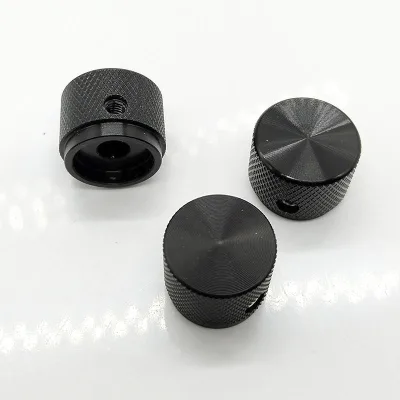
Dimensional accuracy is the primary technical specification to verify when sourcing these components, as the fit between the knob and the potentiometer shaft is critical for operation. Buyers must confirm the tolerance grades, which can range from standard industrial levels to high-precision requirements of +/-0.005mm as requested. The shaft hole diameter is a key measurement, often standardized at 6.35mm, but variations exist depending on the specific application, such as guitar pedals or industrial machinery. Additionally, the presence of a set screw is a vital mechanical feature that must be verified to ensure the knob remains securely attached during operation, especially in high-vibration environments.
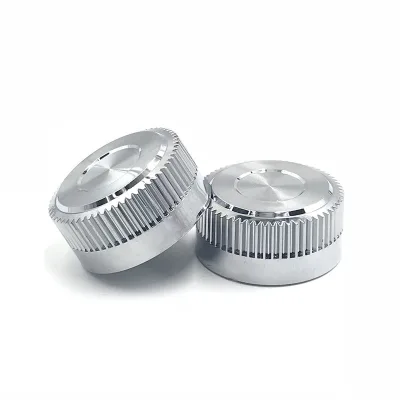
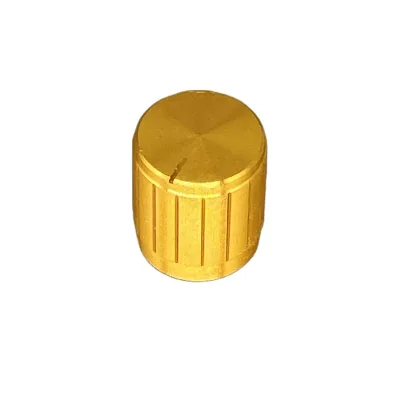
Material composition and surface treatment processes are equally critical for determining the longevity and performance of the knob. The supply chain frequently offers aluminum alloys, but some applications may require copper, brass, or stainless steel for enhanced conductivity or corrosion resistance. Surface treatments such as anodizing and polishing are common methods to improve durability and aesthetics, and buyers should verify the specific finish quality against their application needs. The operating temperature range, observed as -25 to +85 degrees Celsius, provides a baseline for environmental suitability, but specific thermal requirements for extreme conditions should be confirmed with the supplier before finalizing the order.
Compliance and Safety Documentation
Compliance documentation for metal potentiometer knobs often centers on environmental regulations and material safety standards. Listings frequently reference CE and ROHS certifications, which are essential for products entering the European market or those used in consumer electronics. These certifications ensure that the materials used, including the aluminum alloys and any plating or coating processes, do not contain restricted hazardous substances. Buyers should request current test reports or certificates of conformity to verify that the specific batch of components meets these regulatory requirements, as compliance status can vary between different production runs.
In addition to environmental compliance, quality management systems play a significant role in ensuring consistent product safety and reliability. Many suppliers operate under ISO 9001 certification, which indicates a structured approach to quality control throughout the manufacturing process. While the specific standard version may vary, the presence of such a certification suggests that the supplier adheres to recognized procedures for defect prevention and process improvement. For applications in automotive or medical sectors, additional documentation regarding material traceability and specific industry standards like JIS Code, EN, or GB may be required to validate the safety and performance of the components.
Cost Drivers and Commercial Terms
The cost of CNC machined metal potentiometer knobs is driven primarily by the complexity of the machining process and the choice of raw materials. While die casting provides a cost-effective method for creating the initial shape, the subsequent CNC milling and turning operations add significant value and cost, particularly when high tolerances like +/-0.005mm are required. The selection of materials also impacts pricing, with stainless steel and specialized alloys generally commanding higher costs than standard aluminum alloys. Surface treatments such as anodizing or polishing further increase the unit price, as these processes require additional time, equipment, and quality checks.
Commercial terms regarding packaging and shipping are also key factors in the total cost of ownership. Products are typically packed in paper cartons or wooden cases, with specific quantities like 100 pieces per box, which affects logistics planning and storage requirements. Buyers should clarify the lead times associated with different order volumes, as the transition from prototyping to mass production can impact delivery schedules. The observed MOQ range of 1 to 1000 units offers flexibility, but larger orders may benefit from negotiated pricing structures. Understanding the full scope of these commercial terms helps in budgeting accurately and avoiding unexpected expenses related to packaging or expedited shipping.
Supplier Qualification and Quality Control
Supplier qualification should focus on the depth of their machining capabilities and their ability to handle custom OEM requests. A qualified supplier will possess 3, 4, or 5-axis center machining equipment capable of performing micro-machining tasks, ensuring that even the most intricate features of the potentiometer knob are produced accurately. The ability to accept drawings in various formats, including 2D PDFs and 3D IGES or STEP files, is a strong indicator of a supplier's technical readiness and flexibility. Buyers should verify that the supplier has experience with the specific die-casting methods, such as hot chamber die casting, which are often used to produce the initial aluminum alloy components.
Quality control processes must be robust enough to handle the precision requirements of the final product. Suppliers offering "Precision Die Casting" and "CNC Milling" services should have established protocols for inspecting critical dimensions and surface finishes. The presence of a "Customized OEM Service" implies that the supplier is willing to work closely with the buyer to address specific quality concerns, but this requires clear communication of acceptance criteria. Buyers should inquire about the supplier's internal testing procedures and their track record for maintaining consistent quality across mass production runs, as this is crucial for minimizing defects in the final assembly.
Long-Term Procurement Checks
Long-term procurement success depends on establishing a reliable supply chain that can adapt to changing production volumes and design iterations. Buyers should regularly review the supplier's capacity to maintain the observed production type of mass production while accommodating the flexibility needed for rapid prototyping. The ability to source consistent materials, such as aluminum, copper, and steel alloys, is vital for maintaining product consistency over time. Regular audits of the supplier's quality management systems and adherence to standards like ISO 9001 help ensure that the supply chain remains stable and compliant with evolving industry requirements.
Continuous communication regarding technical updates and material availability is essential for mitigating supply chain risks. As the market for electronic and mechanical components evolves, suppliers may introduce new surface treatments or material alternatives that offer better performance or cost efficiency. Buyers should maintain an open dialogue with their suppliers to stay informed about these developments and to ensure that the sourcing strategy remains aligned with long-term product goals. By fostering a collaborative relationship, buyers can secure a steady supply of high-quality CNC machined metal potentiometer knobs that meet both current and future operational needs.
FAQs
Can I get custom CNC machined metal potentiometer knobs?
Yes, customized OEM service is available for these components. Buyers can submit 2D or 3D drawings in formats like PDF, CAD, IGES, or STEP. The manufacturer supports precision die casting and CNC machining to produce parts according to specific client requirements, ensuring the final product matches the intended design exactly.
What materials are used for these potentiometer knobs?
These knobs are primarily made from aluminum alloy, though copper, brass, steel, and stainless steel are also available. The material capabilities include various aluminum and zinc alloys. This flexibility allows buyers to select the optimal material based on weight, durability, and aesthetic requirements for their specific hardware or machinery applications.
What is the tolerance grade for these machined parts?
The standard tolerance grade is 6, with specific machining tolerances as tight as plus or minus 0.005mm upon request. This high precision is achieved through 3, 4, or 5-axis center machining equipment. Such accuracy ensures that the knobs fit perfectly onto shafts, such as the 6.35mm shaft hole diameter found in specific models.
What surface treatments are applied to these metal knobs?
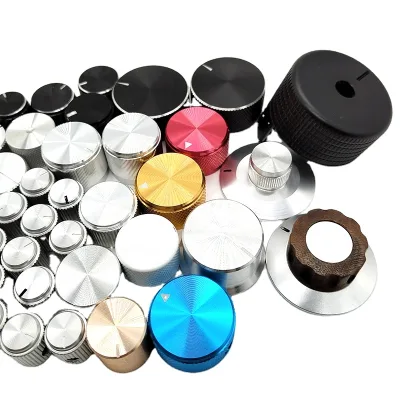
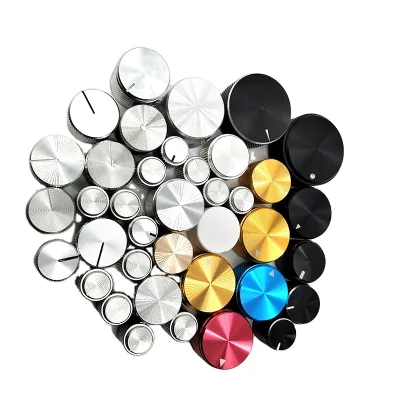
Common surface treatments include anodizing and polishing to enhance durability and appearance. These processes protect the aluminum or metal substrate from corrosion and wear. The finished products often feature specific housing colors like black or silver, with optional head line colors in white or black to meet distinct visual and functional standards.
What is the minimum order quantity for these items?
The minimum order quantity ranges from 1 to 1000 units, accommodating both prototyping and mass production needs. This flexibility supports rapid prototyping services as well as large-scale hardware tool and machinery accessory orders. Buyers can start with small batches to test quality before committing to larger production runs.
Where are these potentiometer knobs manufactured?
These components are produced in Guangdong, China, utilizing advanced hot chamber die casting machines and CNC machining centers. The facility operates under ISO 9001 certification standards to ensure consistent quality. This location supports efficient logistics and rapid turnaround times for global buyers seeking reliable hardware and auto accessory components.